Background

Making complex assistance behavior clear at a glance.

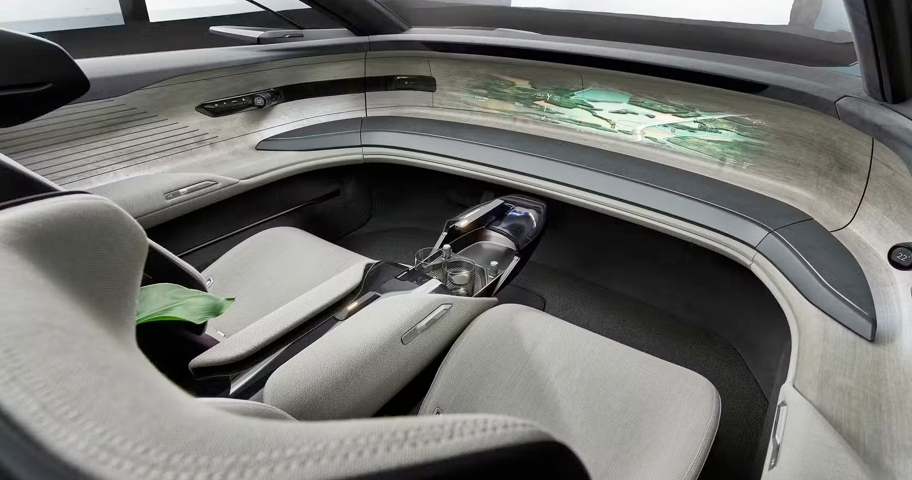
Audi steering wheel interior context

Audi needed a unified ADAS HMI for lane guidance, vehicle spacing, and hazard awareness.

The system processed lane position, nearby vehicles, distance, speed changes, and crossing hazards while drivers had seconds to respond.

The challenge was translating perception data into glanceable guidance that supported driver trust, situational awareness, and rapid comprehension.

Problem

Too much signal, not enough clarity.

  • Features used inconsistent visual patterns and priorities
  • Alert hierarchy was unclear in time-sensitive moments
  • Patterns needed to scale across HUD, instrument cluster, and center display
  • Drivers needed immediate clarity, not more visual noise

Adaptive cruise, emergency intervention, and turn support needed to feel like one coherent system.

Discovery

Understanding driver perception and response in motion.

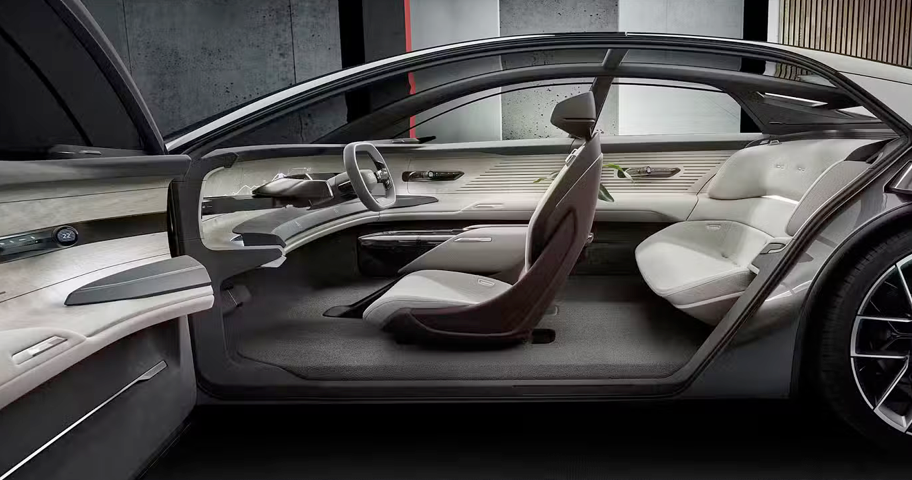
Audi steering wheel interior context
  • Studied lane, distance, and hazard feedback at speed
  • Aligned system behavior with Human Factors and Engineering
  • Reviewed state changes across cruise, turns, and emergencies
  • Prioritized glanceability, timing, and signal hierarchy
  • Used Dovetail AI to tag driver reactions, trust, and response timing

Drivers react to spatial signals, timing, and hierarchy—not detailed interfaces.

Dovetail AI accelerated transcript review and comparison across repeated driving scenarios while preserving the nuance of road behavior.

Strategy

One communication system across scenarios and displays.

  • Unify the visual language across cruise, lane guidance, and alerts
  • Define informational, caution, and critical states
  • Create a shared model across HUD, cluster, and center display
  • Reduce cognitive load by showing only the signal needed now

I defined a system-level model that made key scenarios feel legible, predictable, and consistent. Research tied decisions to observed behavior and timing.

Solution

Unifying five ADAS scenarios through spatial hierarchy and feedback.

Audi ADAS lane and pedestrian feedback
Audi ADAS distance and object awareness
Audi ADAS critical awareness and alert state
  • Designed lane and distance cues for cruise and guidance
  • Created clear escalation for caution and critical alerts
  • Simplified turning and crossing feedback
  • Applied the same logic across vehicle displays
  • Focused each state on what the driver needed to know now

Design System

Designing for safety, consistency, and scale.

I defined a scalable visual and behavioral system where consistency meant consistent meaning, not just appearance.

  • Defined spatial rules for lane, distance, and hazard feedback
  • Established motion, contrast, and hierarchy standards
  • Created reusable patterns across display surfaces
  • Produced implementation-ready cross-functional guidance

The result was clearer system behavior and a unified ADAS experience.

Impact

Improving comprehension across five safety-critical scenarios.

  • Unified five ADAS scenarios: lane guidance, adaptive cruise, emergency response, turn support, and intersection awareness
  • Improved glanceability through hierarchy, timing, contrast, and alert escalation
  • Established reusable spatial, motion, and behavioral patterns
  • Aligned Directors, Product and Engineering, and Human Factors and R&D